

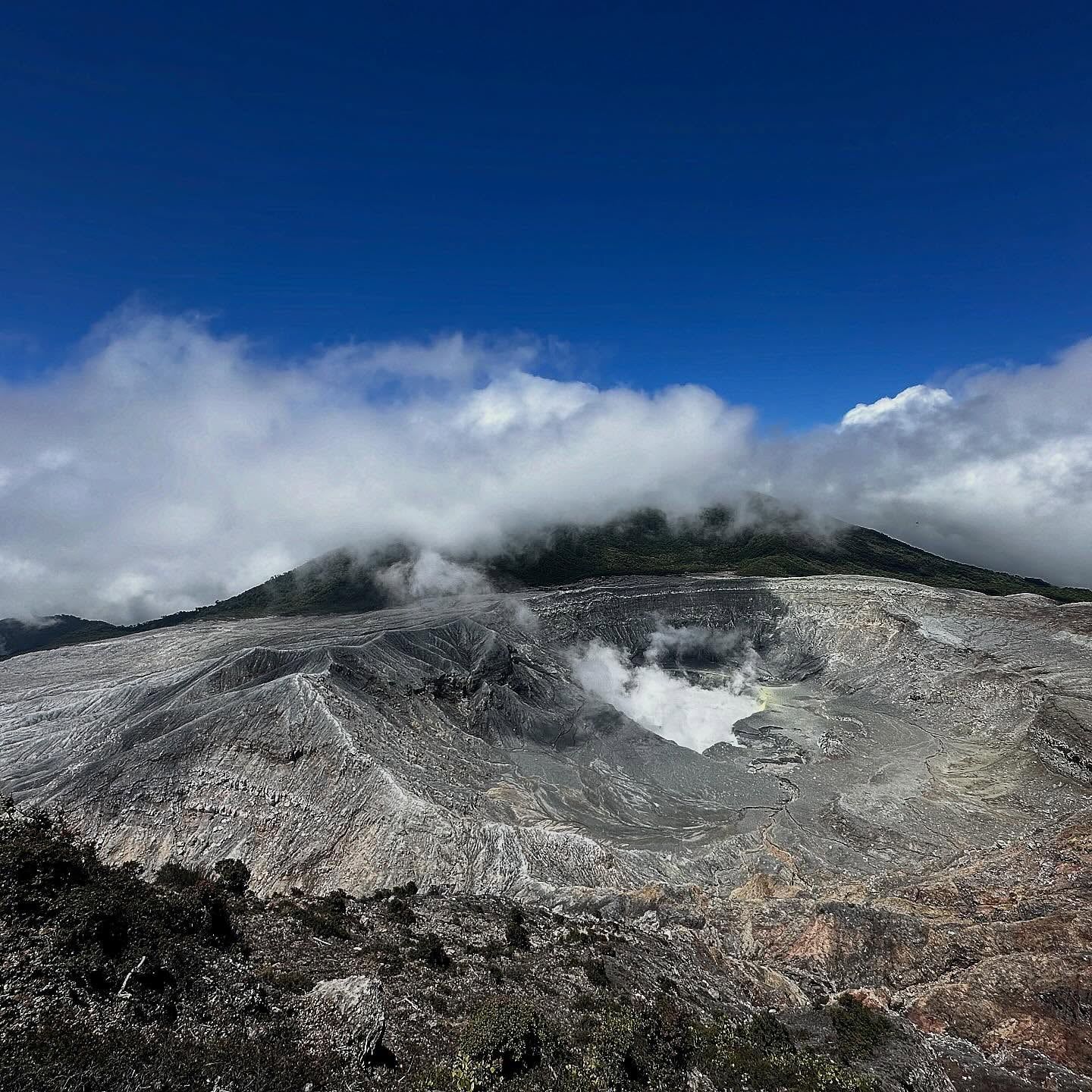
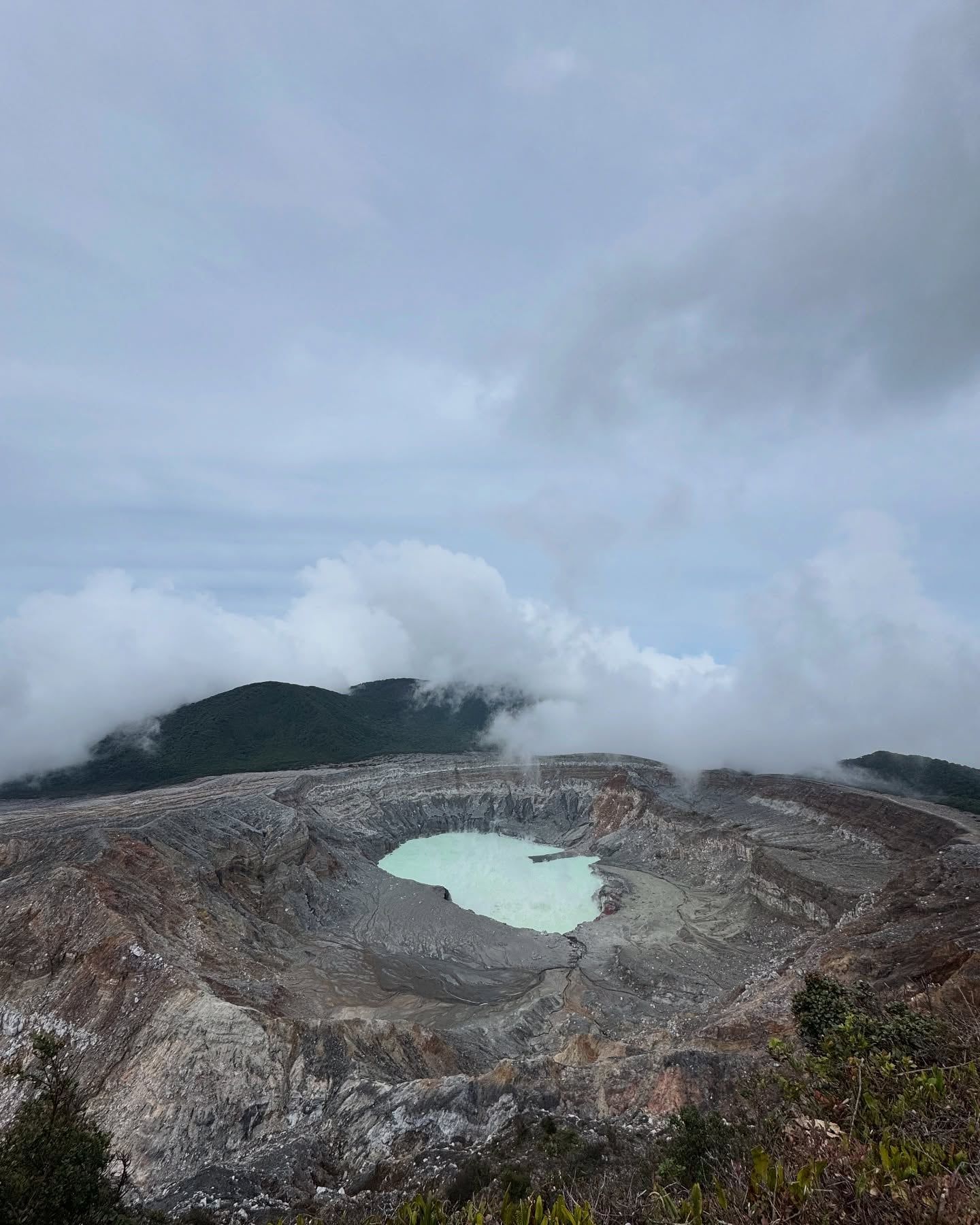
A flat, 600-meter paved trail leads directly to a viewing platform overlooking a massive 1.5-kilometer-wide active crater. At the bottom of this 300-meter-deep abyss sits Laguna Caliente, a highly acidic lake that reaches temperatures up to 85°C.
Find Guided ToursPoás Volcano is an active stratovolcano located 50 kilometers north of San José in Costa Rica's Alajuela Province. Rising to an elevation of 2,697 meters within the Cordillera Central range, the volcano encompasses a massive volume of approximately 100 cubic kilometers. The surrounding landscape consists of a lush cloud forest ecosystem that serves as a refuge for diverse wildlife.
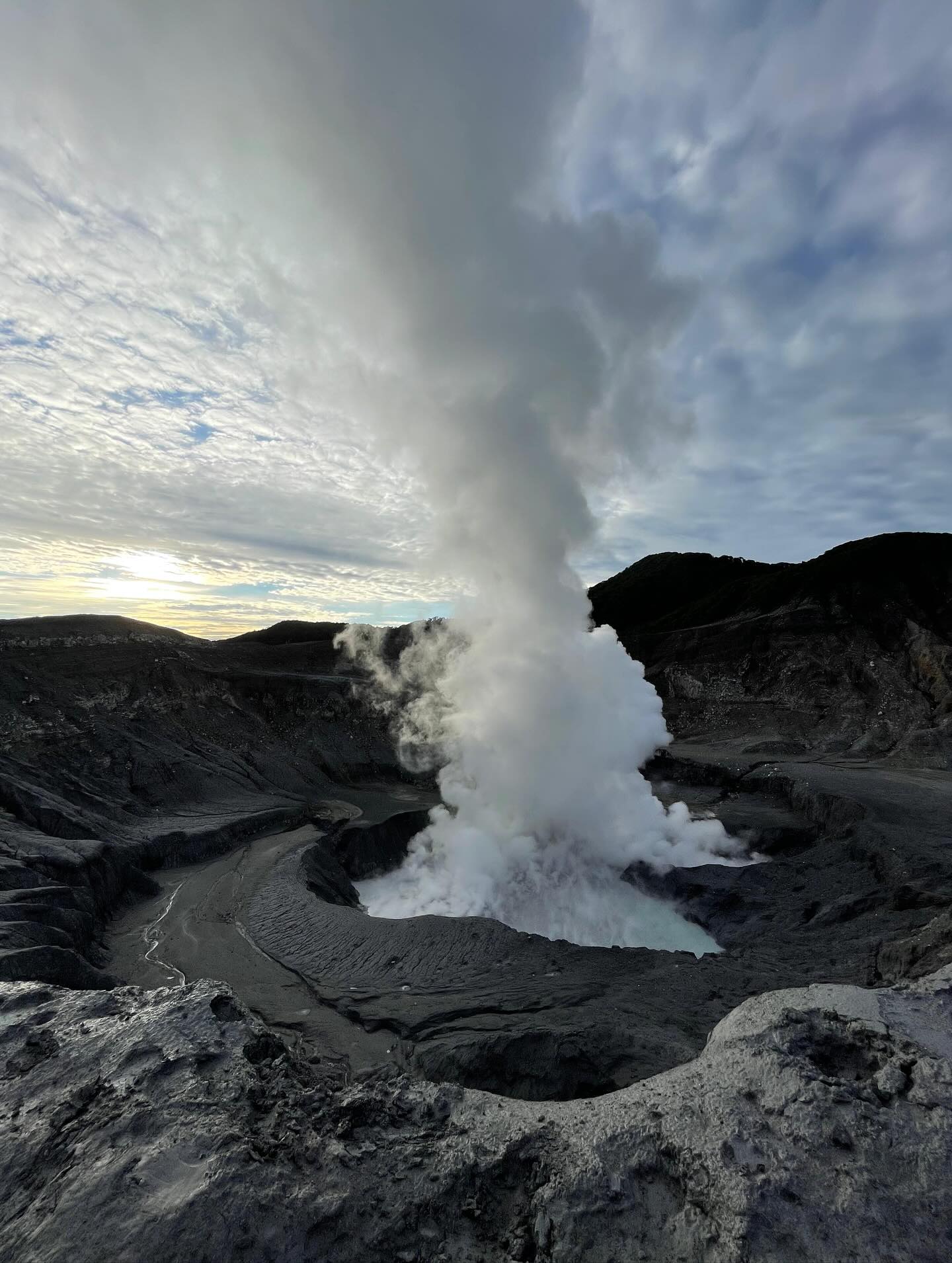
The site is widely known for its two distinct summit crater lakes. The extinct Botos Lagoon holds cold rainwater, contrasting sharply with the active Laguna Caliente. The main active crater spans 1.5 kilometers in diameter and drops 300 meters deep. Inside, Laguna Caliente maintains an extreme environment with a pH of less than one and water temperatures reaching up to 85°C (185°F). NASA researchers study this highly acidic lake to draw parallels to ancient hydrothermal systems that may have once harbored life on Mars.
The geological history of Poás spans the last 10,000 to 20,000 years. Its formation began with a caldera, followed by composite cone construction, flank subsidence, and multiple crater collapses. These unique geothermal features and its complex tectonic history earned it international recognition as one of the first 100 IUGS Geological Heritage Sites.
As part of the Central America Volcanic Arc, Poás remains one of the most active and heavily studied volcanoes in Costa Rica. It has recorded at least 54 documented eruptions since 1747, averaging an eruptive event every 5.2 years. A major eruption in April 2017 forced a 16-month closure of the national park, which later reopened with advanced safety measures. Eruptive activity continues frequently today, with notable events documented in 2019, 2023-2024, and an ongoing eruption that began in February 2026.

Discover the full history and cultural significance on our About page.
Walk the flat, 600-meter paved trail to peer into a 1.5-kilometer-wide active volcanic abyss. On clear mornings, the viewing platform provides direct sightlines to Laguna Caliente. This highly acidic, turquoise crater lake reaches temperatures of 85°C and bubbles constantly with active fumaroles.
A 30-to-40-minute walk through a dense, mossy cloud forest leads to an entirely different volcanic feature. The path ends at a peaceful extinct crater filled with cold rainwater. It provides a stark, quiet contrast to the extreme geothermal activity found at the main overlook.
Driving up Route 712 toward the 2,697-meter summit takes you through the agricultural towns of Fraijanes and Poasito. Pull over at the roadside stands lining the route. Local vendors sell fresh-picked strawberries grown in the rich soil, alongside regional cheeses and hot chocolate.
Located just 30 minutes from the national park, this working plantation is the only commercial coffee farm owned by Starbucks. Take an educational tour to see how beans are grown, harvested, and roasted. Afterward, drink a fresh brew at the open-air cafe overlooking the valley.
Hand-picked tours with free cancellation and verified reviews
 Free Cancellation 10h
  Free Cancellation 13h
  Free Cancellation
  Free Cancellation
  Free Cancellation
  Free Cancellation 6h Free Cancellation 11h
  Free Cancellation
 The optimal time to visit Poás Volcano is during the dry season from late December to late April, when clear morning skies maximize your chances of seeing the active crater. Regardless of the month, secure an 8:00 AM entry slot because thick fog typically obscures the summit by 10:30 AM.
March and April provide excellent dry conditions with clear morning skies. May shifts into the rainy season, bringing high humidity, frequent afternoon showers, and slippery trails to the 9,000-foot summit.
Falling squarely within the rainy season, these months bring heavy rainfall and high humidity. Thick fog frequently rolls in early, completely obscuring views of the 1.5-kilometer-wide main active crater.
This period marks the height of the rainy season. Visitors will encounter muddy trails and persistent fog that blocks the view of Laguna Caliente, making crater visibility highly unlikely.
Starting in late December, the dry season brings the most reliable weather. Visitors experience cooler temperatures and the highest probability of clear, unobstructed morning views of the acidic crater lake.
Poás Volcano National Park operates daily from 8:00 AM to 4:00 PM, including all national holidays. The final entry permitted into the park is strictly at 2:00 PM.
| Category | Price |
|---|---|
| Foreign Adult | $15 USD (plus taxes) |
| Foreign Child (Ages 2-12) | $5 USD (plus taxes) |
| Foreign Child (Under 2) | Free |
| Costa Rican Citizen or Resident (Adult) | 1,000 colones |
| Costa Rican Citizen or Resident (Ages 2-12) | 500 colones |
| Parking (Car) | 2,000 colones |
| Parking (Motorcycle) | 1,000 colones |
Mandatory advanced online reservations are required through the official SINAC ticketing website, as tickets are not sold at the gate. Visitors must select a specific date and a 20-minute entry time slot, and provide the full names and passport numbers for all attendees.
For complete schedules and ticket prices, visit our Hours & Fees page.
Visitors can reach Poás Volcano by traveling 50 kilometers (31 miles) north from San José. Options include driving a rental car, taking a weekend public bus, or booking a private transfer.
📍 Alajuela Province, Costa Rica
Driving from San José or the SJO Airport takes you north along Route 712. You will pass through the agricultural towns of Fraijanes and Poasito. The roads are entirely paved, meaning a 4x4 vehicle is not necessary. However, drivers should proceed slowly because the mountain route is steep, narrow, and winding. Be sure to fill your gas tank in Alajuela before ascending.
Public transit requires a two-step route starting from San José. First, board the TUASA bus at Iglesia Parque de la Merced heading to Alajuela. Upon arrival, walk 200 meters south to Prospero Fernandez Park. From there, catch the COOPETRANSI bus that goes directly to the national park. Keep in mind this final bus only operates on Saturdays and Sundays at 9:30 AM.
Booking a door-to-door private shuttle provides a highly reliable transport method from San José or the airport. This service takes you directly to the national park entrance without the stress of navigating mountain roads. Using a private transfer helps ensure you arrive precisely on time. Punctuality is critical here, as visitors must adhere to their strict 20-minute entry window booked in advance.
For detailed transport options and routes, visit our Directions page.
Reserve the 8:00 AM entry slot to maximize your chances of seeing the active crater. Visibility drops sharply after 10:30 AM when thick clouds and fog typically roll in. Morning visits during the dry season from December to April offer the clearest views.
You must purchase tickets in advance through the official SINAC website since none are sold at the gate. Cellular service at the park entrance is highly unreliable. Save a screenshot of your confirmation QR code on your phone so rangers can scan it upon arrival.
The park sits at an elevation of 8,848 feet, making the environment much cooler than the coast. Bring a high-quality rain jacket and warm clothing to handle sudden showers. Photographers should carry microfiber cloths to clear constant lens fogging caused by the extreme humidity.
The active crater emits sulfur dioxide and hydrogen sulfide, which can quickly irritate your respiratory system. Visitors with asthma or heart conditions should consult a doctor before arriving. Park rangers strictly enforce a 20-minute maximum stay at the overlook to minimize exposure to these fumes.
Fill your rental car's gas tank in Alajuela before driving up the 50-kilometer route from San José. You will not find gas stations near the park entrance. The paved mountain roads are steep and winding, which causes vehicles to burn more fuel than highway driving.
Single-use plastic water bottles are strictly prohibited inside the national park. Bring your own reusable container to stay hydrated in the high-altitude air. While the visitor center has a cafeteria, food vendors are not allowed on the trails, so pack your own snacks.
This working coffee farm is the first and only commercial plantation owned by Starbucks. Visitors can take an educational tour of the agricultural process and drink a fresh brew at the open-air cafe overlooking a valley and waterfall.
Situated north of the volcano, this eco-park features five waterfalls, including the massive 37-meter La Paz drop. The grounds contain well-maintained trails leading to a large butterfly observatory, a hummingbird garden, and a wildlife rescue sanctuary.
This historic estate in the fertile Central Valley of Alajuela provides comprehensive tours detailing traditional coffee production. Guests explore the active coffee fields, learn specific roasting techniques, and eat a traditional Costa Rican lunch.
Read what travelers share about their experience visiting Poas Volcano — from practical tips to personal highlights.


Yes, you must purchase tickets ahead of time through the official SINAC website. Tickets are not sold at the park entrance. During booking, you will need to select a specific 20-minute entry slot and provide the passport numbers of all attendees.
The entrance fee for foreign non-residents is $15 USD for adults and $5 USD for children aged 2 to 12, plus applicable taxes. Parking is paid on-site and costs 2,000 colones per car. Costa Rican citizens and residents pay a reduced rate of 1,000 colones for adults.
Book the earliest available entry slot at 8:00 AM. Visibility at the crater drops sharply after 10:30 AM when thick fog and clouds roll in. The park closes at 4:00 PM daily, with the final entry permitted at 2:00 PM.
A 4x4 vehicle is not required to reach the volcano. The 50-kilometer drive from San José takes about 1.5 hours on fully paved roads. Drivers should proceed slowly, as the mountain route via Route 712 is narrow, steep, and winding.
Yes, but direct bus service to the park is limited to weekends. You can take a TUASA bus from San José to Alajuela, then transfer to the COOPETRANSI bus at Prospero Fernandez Park. This direct bus departs only on Saturdays and Sundays at 9:30 AM and costs 4,000 colones round trip.
Bring a rain jacket and dress in warm layers, as the high altitude of 9,000 feet keeps the air cool. Closed-toe shoes are recommended for walking the unpaved Botos Trail. You should also pack a reusable water bottle and snacks, since food vendors are not allowed inside the park.
Poás is one of the most accessible national parks in Central America. The main 600-meter path to the crater overlook is flat and fully paved, allowing manual and power wheelchairs to navigate independently. The visitor center also features accessible restrooms and designated disabled parking spaces.
Park rangers strictly enforce a maximum stay of 20 minutes at the crater viewing platform. This rule minimizes visitor exposure to toxic volcanic gases like sulfur dioxide. A typical visit to the entire park, including the Botos Lagoon trail, lasts between 1.5 to 2.5 hours.
Browse verified tours with free cancellation and instant confirmation.
Find Tours